Where to invest in cleantech in 2026
70% of climate funding goes to renewable energy. That's why the future of cleantech isn't in new hardware, but in software that scales deployment.
Kate Wexell
1/25/20264 min read
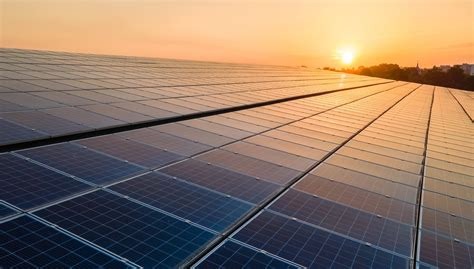
The reality is that 70% of all climate funding (not just venture capital and PE - those are very small pieces of the pie) goes to renewable energy.
It works. Just from 2021 to 2024, the amount of new solar worldwide deployed each year doubled. Now, solar and wind are more economically viable than fossil fuels.
People are embracing the world of renewable energy electrification. Large companies like Google are building massive solar farms. Companies are shifting to electric manufacturing.
It is no longer the technology that constrains the energy transition. Now, the problem is integration.
This is why I believe venture capital firms should be focusing on Seed to Series B startups that address grid intelligence and optimization, storage orchestration and dispatch, and operational intelligence, so renewable energy can operate at scale.
Where should we be investing?
The answer is B2B SaaS companies selling to utilities, developers, grid operators, and large energy consumers. We can catch them at the inflection point where technical validation meets commercial adoption in the Series A-B stages.
Grid intelligence and optimization
Storage orchestration and dispatch
Interconnection management
#1: Grid intelligence and optimization
Right now is the time to invest in grid optimization.
In 2025, significant solar energy production in Brazil was curtailed since its grid couldn’t withstand the load. This will continue to occur without additional investment. The problem is that grid expansion requires 5-10 years of installing new transformers.
Startups that provide predictive analytics, congestion management, and AI-driven load balancing let utilities anticipate bottlenecks before they happen. By reducing wasted energy and deferring expensive grid expansions, these companies create immediate ROI for clients.
These companies might be software platforms that model grid scenarios in real time or optimize the dispatch of distributed energy resources like Voltaware (Series A) for utilities or GridOS (now under GE Vernova) for operators.
#2: Storage and orchestration
Different types of batteries are booming right now: nuclear batteries, vehicle batteries, and incredibly interesting new developments. However, coordinating them across multiple sites and time zones is complex. Utilities often can’t use storage efficiently, which results in solar and wind curtailment.
Startups building orchestration layers can maximize the value of storage assets to make sure energy is dispatched when the demand is highest and storing excess when it’s low. This is a huge lever to scale renewables without adding new generation capacity (in the ever-growing queue of projects).
This is a great use of AI in companies like Fluence (Unicorn IPO) or Stem (IPO). Another possible option is in automated commodities trading (which hedge funds are also looking into doing through AI automations).
#3: Interconnection Management
This might be the most crucial component.
There are over 1,000 renewable energy projects waiting in line for approval in the United States alone. This is the single greatest barrier to developer IRR. Right now, it takes years and millions of dollars to conduct feasibility studies just to submit a project for approval.
A platform that automates the interconnection study process or manages the “permitting to power-on” workflow is a massive scaling opportunity that is needed by every developer.
Why it works
Geopolitics is creating a fierce competition for localized energy. With China leading the renewable energy race and tensions hardening against Russia, countries like the United States and the United Kingdom are focusing on localized energy supply.
While this factor might be temporary, long-term energy needs are not. Despite the exit of the United States from the IPCC and UNFCCC this month to shift towards bilateral energy security, there are still over a hundred other countries committed to submitting NDCs and reaching net-zero by 2050.
More importantly, companies operating within the European Union have to provide sustainability reporting and transition their Scope 2 and 3 energy supplies to renewable sources.
This provides a strong incentive for increased usage of renewable energy regardless of political party.
Each of these solutions is software-based to optimize and enable existing deeptech products. This means that we could see extremely short development and iteration timelines without the reliance on long hardware cycles.
What are the risks?
This is not a sign for firms to bet on new generation technologies or insistence that renewables will fully displace fossil fuels on a fixed timeline. It is to show the benefits of increases in existing technology.
With protests against the scaling of electric autonomous vehicles, pulling out of international net-zero targets, and fighting against the deployment of AI data centers, there is a potential for electricity growth to stall (although highly unlikely).
A more likely scenario is that current geopolitical tensions are causing a reluctance to follow United Nations sustainability targets in favor of sovereign security. This might result in further withdrawals from policy frameworks promoting emissions performance, like the European Union Corporate Sustainability Reporting Directive.
However, the most relevant risk is in utility companies optimizing their capabilities internally rather than relying on a third-party B2B startup to swoop in and save them.
My Background
For those of you who don’t know me, I sit at the intersection of public policy, climate finance, and a strong interest in real-world execution.
I earned my bachelor’s degree at 19 in public policy
I’ve worked with state and federal-level US climate and energy policy firms
I’m currently undergoing operator exposure at an energy decarbonization startup in London
I’m currently studying both climate finance and policy as a student at Imperial College London in the MSc in Climate Change, Management, and Finance program
Now, I have familiarity with both the US and EU regulatory environments. This allows me to evaluate not just whether technologies work, but whether they survive permitting, procurement, financing, and grid realities.
This is why I think the next phase of the energy transition won’t be won with cheaper energy alone, but with higher rates of scalability and deployment over the next decade.