VC restructuring analysis of Getaround, Inc.
Context:
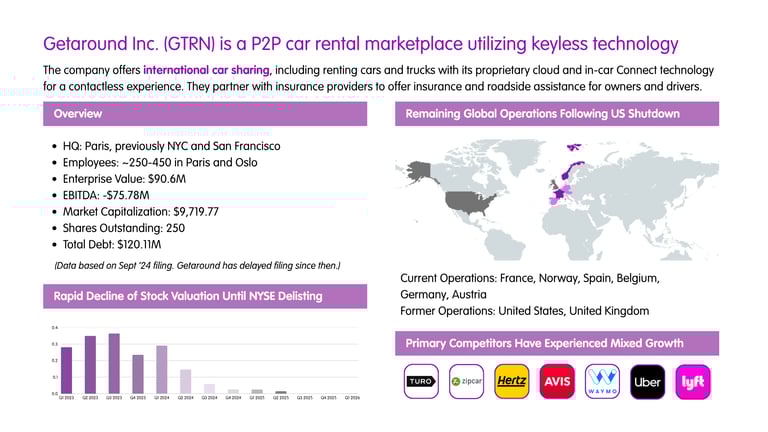
Getaround Inc. is a peer-to-peer car-sharing marketplace. It uses keyless technology to allow individuals to list their cars for rent and for renters to find the car in a parking lot and use the Getaround software to access the car.
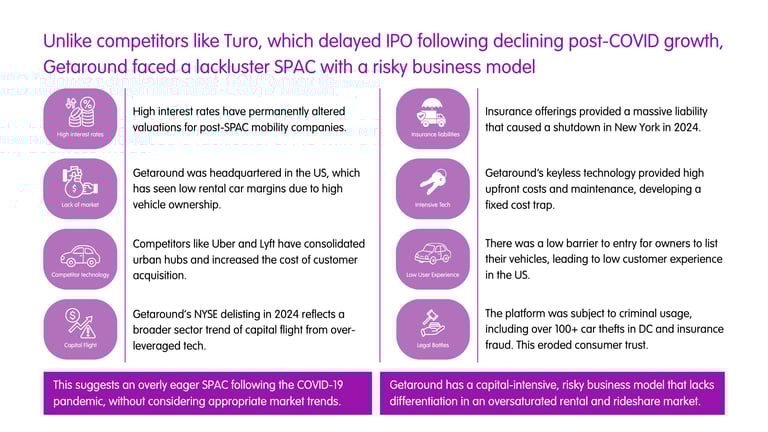
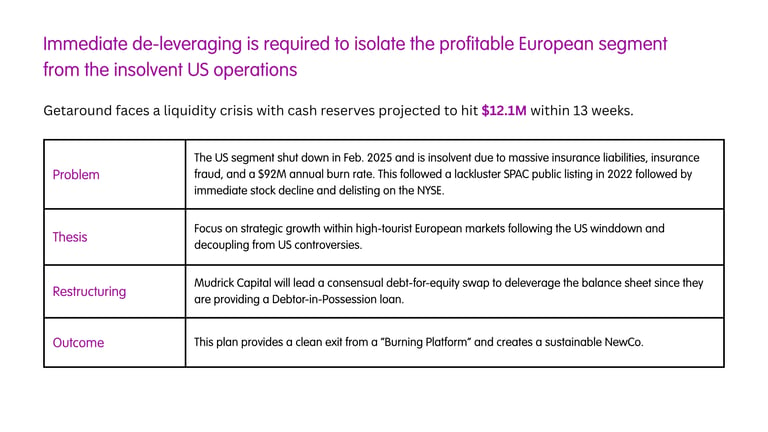
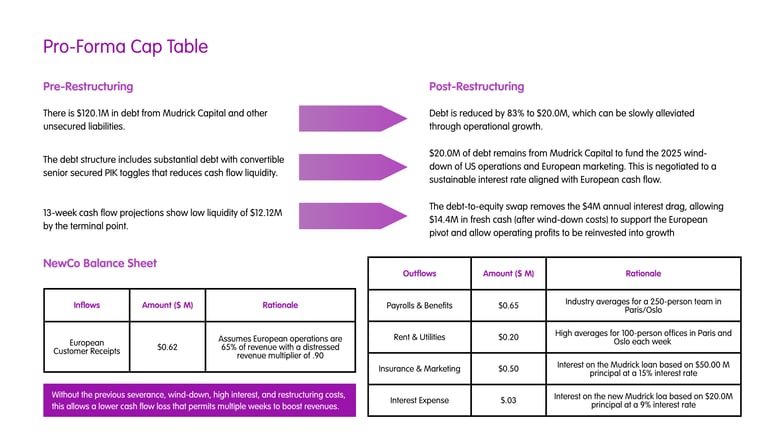
Previously, it had a successful expansion into the European market, but faced a severe liquidity crisis driven by massive insurance liabilities and high operational burn in the US. The restructuring plan focuses on a “burning platform” exit, isolating the profitable European operations from the insolvent US entity through a consensual debt-for-equity swap.
Problem:
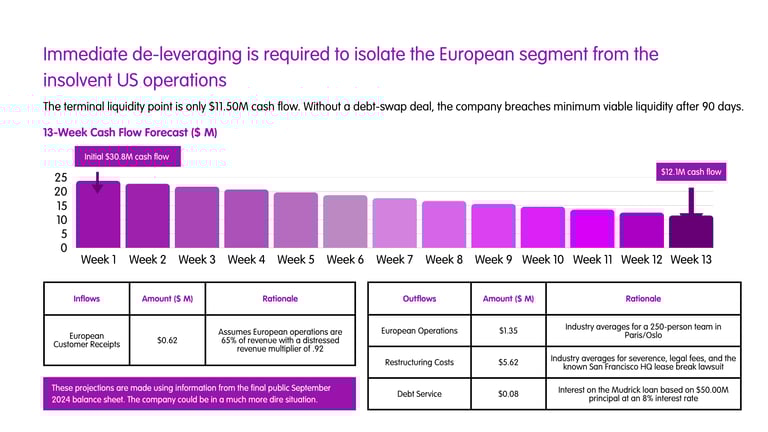
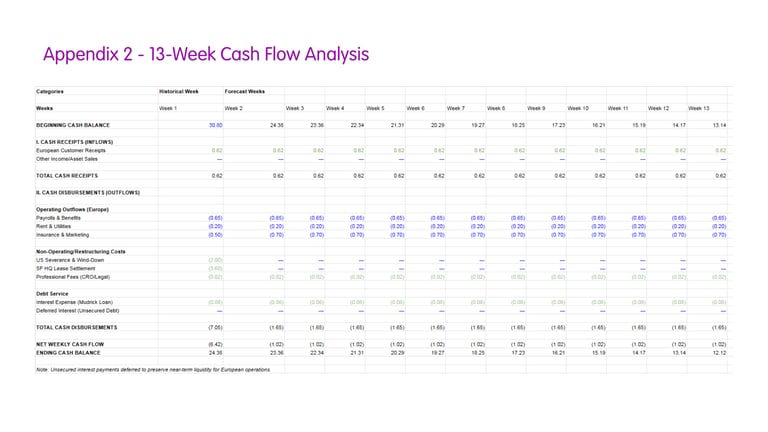
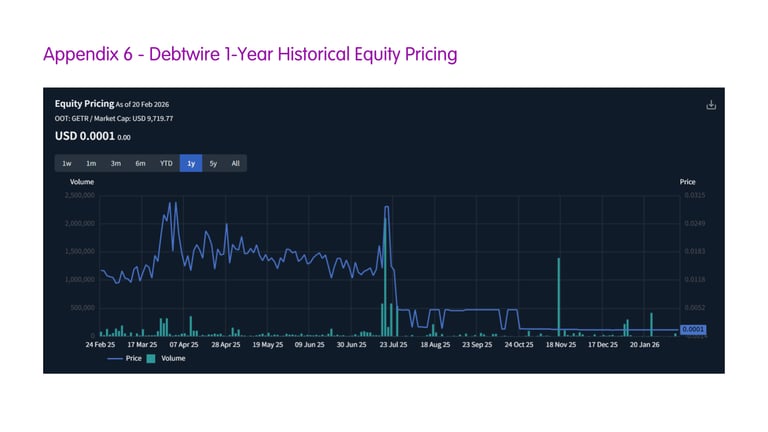
In early 2025, Getaround reached a critical breaking point characterized by insolvency in the US, exacerbated by fraud and significant liabilities, cash reserves dwindling to a projected $12.1M within a 13-week window, and a continuous stock decline following a 2022 SPAC listing and subsequent delisting in 2024 from the New York Stock Exchange. While the US operations were shuttered in February 2025, the European segment remained a high-growth engine with strong traction in tourist-heavy markets.
Solution:
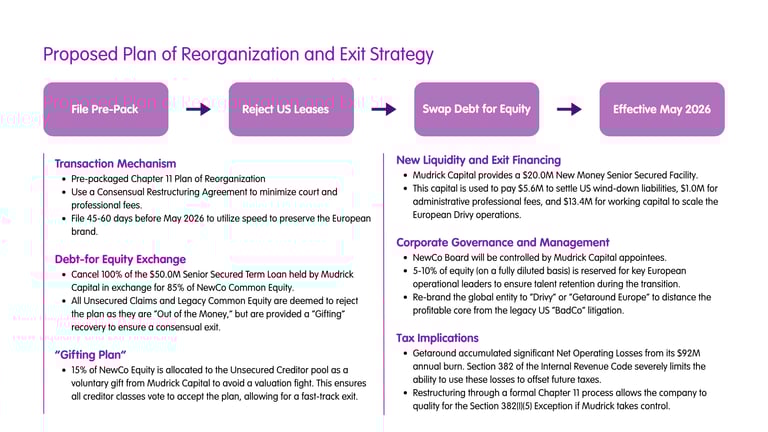
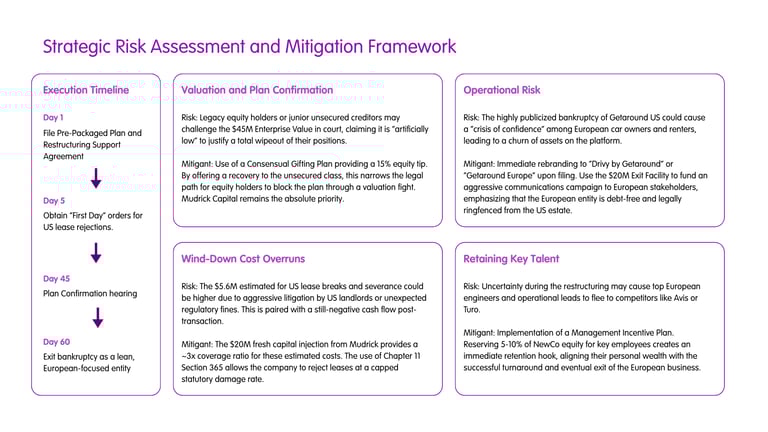
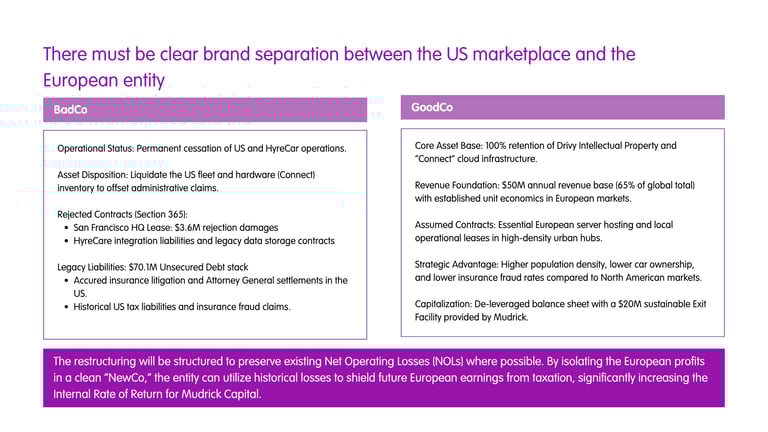
The proposed turnaround strategy centers on a clean break from the US legacy issues to preserve the value of the European business.
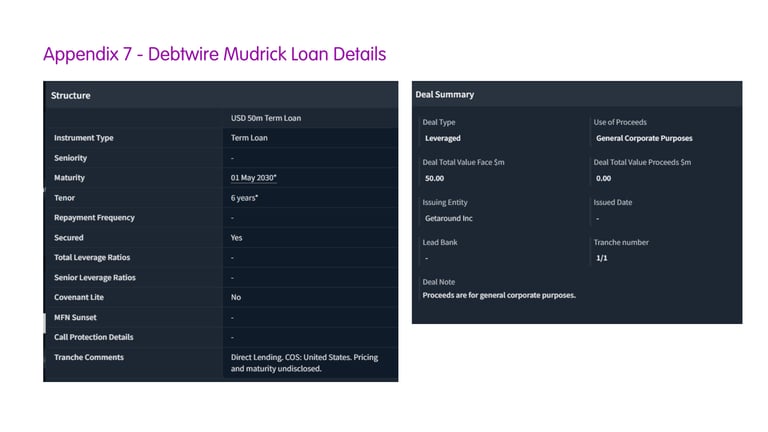
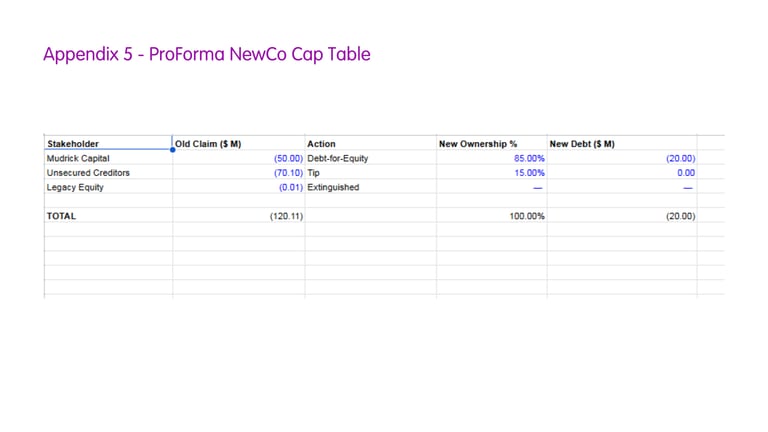
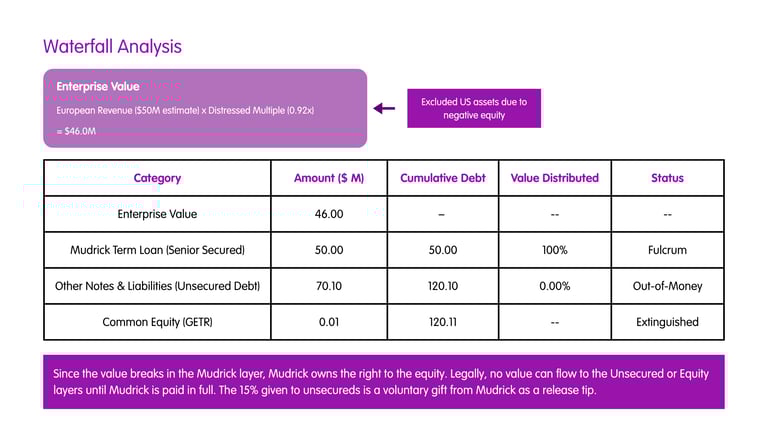
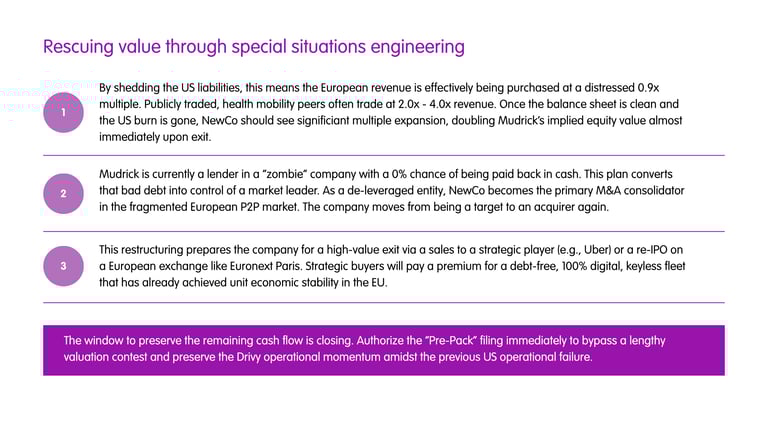
It focuses on a debt-for-equity swap with the lead creditor Mudrick Capital, providing a Debtor-in-Possession loan. This initiates a swap to deleverage the balance sheet. Then, a NewCo entity is created, focusing exclusively on the European market. Finally, there would be a shift from a global volume-chasing model to a margin-focused strategy in high-density European cities.
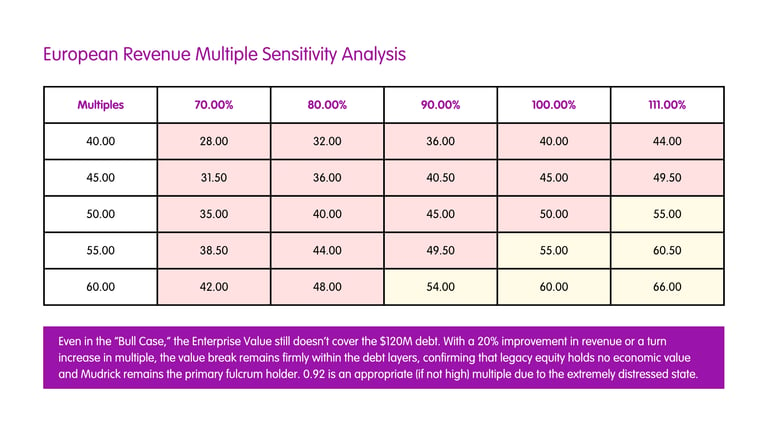
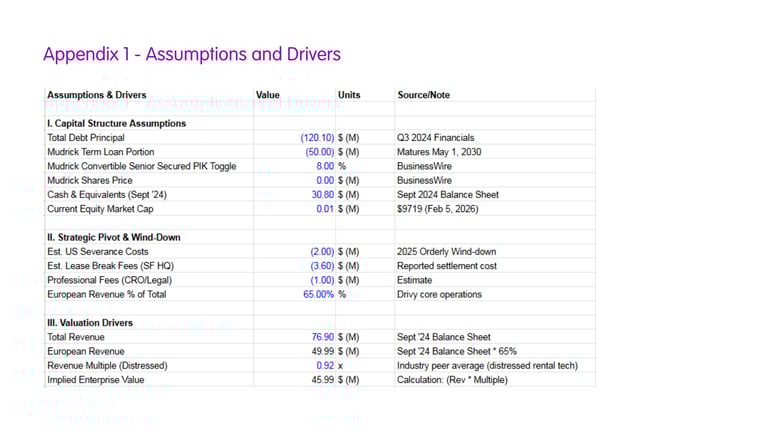
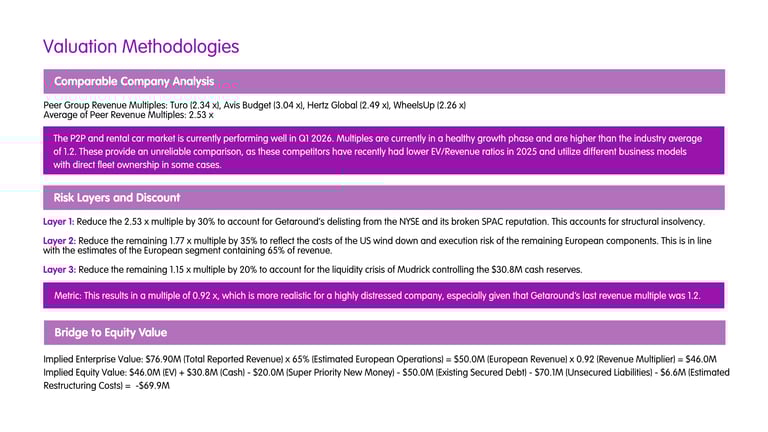
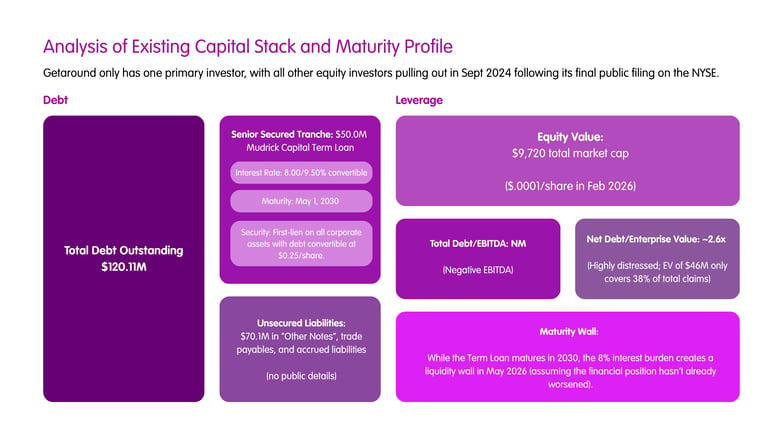
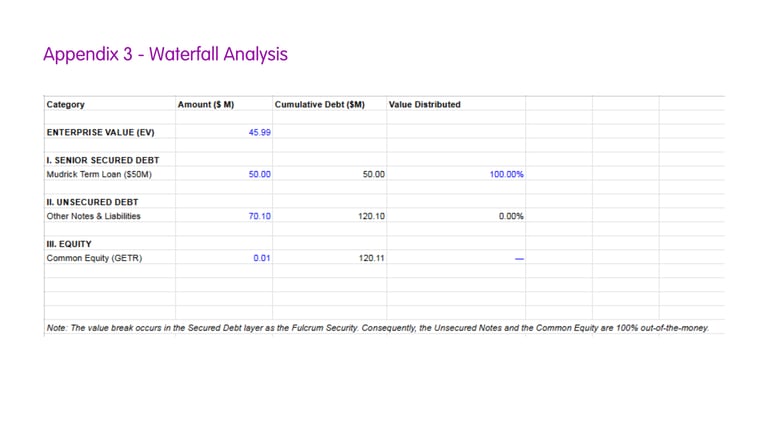
The restructuring involves a significant overhaul of the capital structure to eliminate $120.1M in old claims.
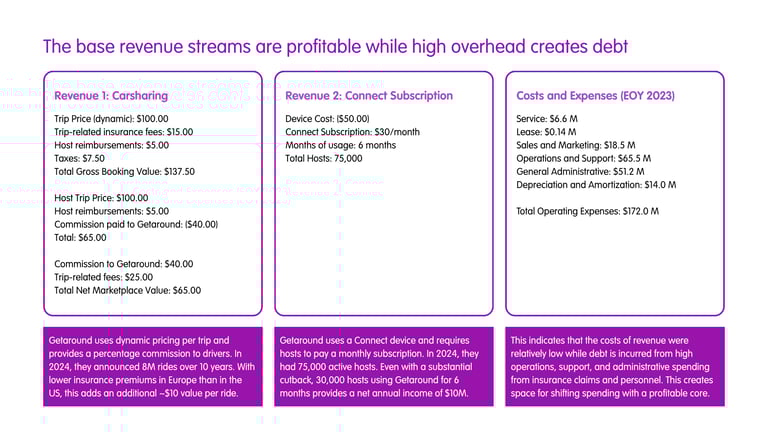
The European division serves as the foundation for the restructured NewCo due to several competitive advantages. The “Connect” cloud technology provides a 100% contactless user experience, which is the main feature of Getaround as a company. It has high adoption rates of car-sharing in urban European centers compared to a fragmented US market that already has high rates of car ownership. Finally, it has lower exposure to the specific insurance fraud issues that plagued the US operations.
Impact:
The Getaround case highlights the necessity of geographical ring-fencing in distressed VC-backed companies. By aggressively cutting the burning platform of the US operations and handing over control to senior creditors, the restructuring plan preserves the core technological value and the viable European market presence, providing a path toward a profitable future.