How to *actually* be part of the climate solution
Where to invest your time and money
11/12/20255 min read

For years, I worked in climate education. I helped kids across the world learn the basics of climate policy. I taught college students about the importance of nuclear energy.
But as many presentations as we attend about recycling or turning off the light switch, this will not solve the climate crisis.
What I watch again and again is people joining the climate education or policy space for clout instead of impact: hosting a cool conference, earning another certificate for their LinkedIn, or saying they attended a policy session where they contribute a few sentences to a policy brief but don’t actually show it to legislators.
That’s not to say that education isn’t a helpful and necessary component, but it doesn't create as large of an impact.
If you actually want to solve the climate crisis, here’s how to help (and invest).
Understanding the Problem
The first component is understanding what is going on. The climate crisis is caused by increased greenhouse gas emissions that create a warming temperature. This is caused by the human burning of fossil fuels.
Currently, we are trying to rapidly lower emissions and then reverse emissions. This means that we have to look at the climate crisis through the lens of the future, the present, and the past: how can we create clean energy sources that remove the need for fossil fuels, how do we reduce carbon emissions in the present, and how do we remove carbon already emitted?
The largest areas for work and investment exist in solar power, nuclear energy, materials science, supply chain optimization, energy efficiency, and direct air capture.
The Future: Renewable Energy Transition
Decades from now, we can envision a clean planet. For this to be a reality, we need to have clean energy. The primary issue is not with developing new technologies that have lower emissions. The issue is with deploying them in a timely fashion.
There are several types of renewable energy: solar, wind, hydroelectric, geothermal, nuclear fission, and nuclear fusion.
Solar is by far the cheapest, fastest, and most popular source of renewable energy. To quickly change the trajectory of the climate crisis, we need to be building solar everywhere possible. The bottleneck is that we cannot always store the solar energy produced. This is why storage is essential to ensure the grid won’t be overloaded and that the energy is appropriately captured.
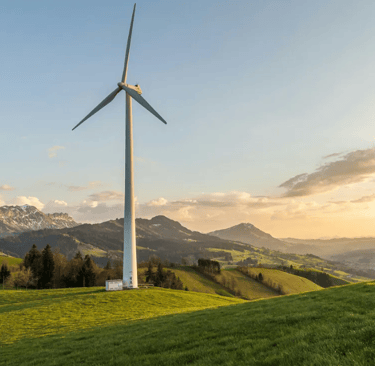
Wind is also easy and cheap, but it is the least effective. Unreliable wind flow causes power outages. While offshore wind is the most effective, its installation is difficult due to restrictive regulations.
Nuclear fission power plants provide some of the largest, cleanest sources of energy. However, the permitting and construction process takes 5–10 years, requiring large upfront capital and a lot of red tape. Investors should not expect an ROI until decades of operation.
Nuclear fusion is even cleaner, using the same energy process as the sun. It relies on incredibly strong magnets and won’t be commercially available until the 2030s, taking another 5–10 years per plant to construct. Unless significant supply chain or policy decisions are made, it is not a feasible solution to the current crisis, but a long-term foundation for energy.
In the meantime, small modular nuclear reactors and nuclear batteries are cheaper and faster. Between solar, storage, and nuclear batteries, the climate crisis can be combatted in the current moment with less capital and gradual progress.
Change will come through investing in solar and nuclear battery installation across industries, developing more energy storage and easier transmission, and investing long-term in large nuclear fission and fusion power plants.
The Present: Materials Science, Supply Chain, and Energy Efficiency
In the current moment, we have to think about reducing carbon emissions. Many companies are already mandated by governments to develop net-zero emissions plans. The trick is finding solutions that are a financial incentive to operate more sustainably.
This comes in three categories: materials science, supply chain, and energy efficiency.
Energy Efficiency: The most obvious solution is determining how companies can use less energy in general. This might be AI automating a manufacturing process, determining peak energy usage for a data center, or even detecting when a building should turn off its light switch. Both software solutions and equipment upgrades are needed here. For instance, a startup developing an electric steam boiler takes less energy, saves a manufacturer money, and reduces carbon emissions, which is the perfect win-win solution.
Supply Chain: A company has to consider carbon emissions from the procurement and transportation of components. Looking at insights to shorten the supply chain, evaluate vendors, remove components entirely, manufacture domestically, create electric transportation fleets, and reduce inventory stock all reduce carbon emissions.
Materials Science: A company must look at the materials of an object itself. Will the product emit carbon in the manufacturing process and in the future? This involves considering how to make plastic (from oil) and cement (which traps heat) sustainable. This means alternative materials as simple as compostable cups or cement made from recycled materials.
The Past: Direct Air Capture
If we make it to a point where we are no longer polluting the atmosphere to our current levels, it then becomes a mission of restoring the planet to its previous CO2 levels.
The clearest path right now seems to be direct air capture. This involves sequestering carbon and permanently scrubbing it from the atmosphere. However, it is expensive, requires a lot of energy, and needs a clean energy source to power it. This solution requires more research and development.
Unfortunately, many other solutions (like cloud seeding, putting sulfur in the air, or using algae) are highly invasive, unsafe, and expensive. The solutions that aren’t (like planting trees) are also the least effective.
How to Help
Many of these solutions are a feat of engineering genius. It’s not the work of a carbon accountant sitting in a corporate headquarters counting carbon emissions. It’s about advancing existing technology to make it simpler and cheaper to adopt.
In order to be effective in the climate space, the best things to study are artificial intelligence, computer science, physics, chemistry, engineering, business, and policy. It is a very science-focused field despite being dominated by humanities-focused activists in the media.
The reality is we need three types of expertise to address the bottlenecks of deployment, capital, and regulation:
Engineers working on developing new iterations of this technology.
Policy specialists who can communicate this work to legislators and corporate governance to explain its importance and financial benefits.
Businesspeople who are able to successfully lead these new initiatives and prove market viability.
Our current energy system will collapse in the next few decades. Energy companies will either transition or be forced out of power. There are opportunities to help establish a new regime, whether that’s through engineering prowess, business acumen, communicating these concepts to those in power, or investing in these solutions.
Stop wasting time on performative activism. Invest in deployment, optimize efficiency and supply chains, and build the infrastructure of the future.
Note: Education and activism are still important and necessary, but they are not as efficient in directly tackling the problem as these other actions.