How Blended Finance is De-Risking the Energy Transition in Emerging Markets
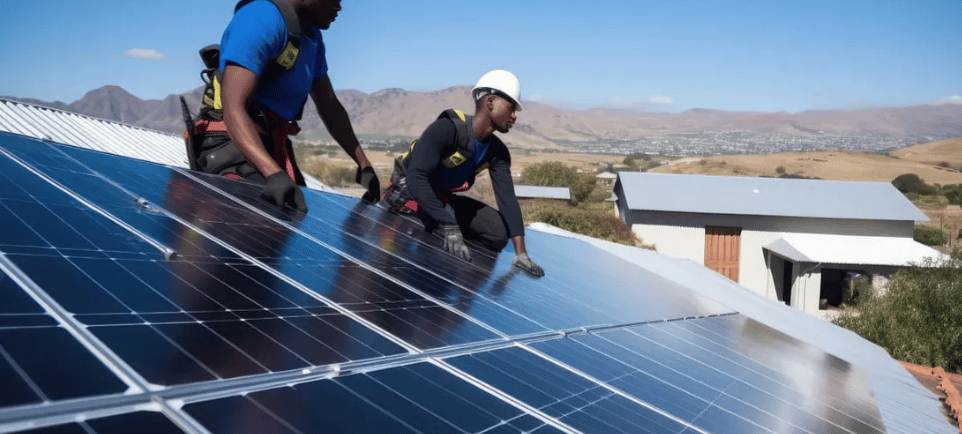
Solutions to finance renewable energy projects in Africa
11/9/20253 min read
Imagine you’re loaning your friend money. If you know they make $7,000/month as a Google software engineer, you might be more inclined to give them the loan than if they are constantly in debt and make $15/hour at McDonald’s. Unfortunately, this is how investing works at the global level.
So what happens when emerging markets like Sub-Saharan Africa are in desperate need of renewable energy but don’t have the economies to support these investments?
The investment landscape of Africa’s renewable energy sector is defined by a paradox. While the continent possesses immense resource wealth and an urgent need for power, the cost of capital remains prohibitively high. This is due to perceived risks, from currency volatility to political uncertainty, that deter commercial investors.
The solution is not more public money, but smarter money. The blended finance model, utilized by specialist investment managers like Camco, is a strategy designed to absorb and mitigate these risks to unlock the scale required of private capital.
Rebalancing Risk and Return
Blended finance is the strategic use of concessional public or philanthropic funds to mobilize large-scale private commercial finance toward sustainable development. The goal is to correct market failure by improving the risk-return profile of investments in challenging environments.
In the African context, this translates to lowering the cost of capital for renewable energy projects, which can be two to three times higher than in developed economies.
Camco’s approach uses specific instruments to transfer risk away from commercial investors.
They combine commercial equity with concessional equity (often sourced from development finance institutions and private investors). This deliberate mix lowers the overall return hurdle for the private sector.
Concessional capital is often structured as junior equity or subordinated debt. This absorbs the initial, higher-probability losses, such as those encountered during the project development phase, making the senior, lower-risk tranches attractive to institutional investors.
Then, each project is given a special purpose vehicle (SPV). The project SPV structure achieves non-recourse financing. By legally separating the project’s assets and liabilities from the developer or operator, it ring-fences the investment, providing a critical layer of security against counterparty risk and ensuring capital can only be used for the designated purpose.
Addressing the Investment Barriers
However, there are still a few remaining risks and uncertainties.
One of the primary uncertainties in Africa is political instability, currency control, and weak regulatory frameworks. Camco uses government guarantees and the presence of development finance institutions, which are often investors in these funds and act as a hedge against sovereign instability.
To tackle the risk that utilities will fail to pay for the power generated by their renewable energy projects, Camco offers credit enhancement on power purchase agreement payments and targets credit-worthy commercial and industrial clients.
Then, to tackle failures in construction, operation, and management, they conduct a rigorous project due diligence process. They visit the sites, conduct resource and grid studies, and talk to the local residents. They structure projects with a highly experienced contractor.
By actively mitigating these elements, Camco can make renewable projects viable and transform the risk profile for investors seeking exposure to the African energy transition.
Proof of Concept
The success of the blended finance thesis is measured by its mobilization ratio, which is the amount of private capital unlocked per dollar of public money.
Successful blended finance initiatives in the African energy sector, such as the African Development Bank’s Sustainable Energy Fund for Africa, have demonstrated leverage ratios of 3:1 or higher. This proves that a relatively small infusion of public risk capital can catalyze substantial private investment.
This structured approach is essential because renewable energy is the largest destination of climate capital, but remains highly dependent on this targeted de-risking to function effectively in high-growth emerging markets.
The deployment of private capital through these structures ensures projects like mini-grids and utility-scale solar and wind can proceed and create a sustainable funding channel for Africa’s energy needs.