Created a tool to help 2M residents identify relevant utility subsidies
Context/Problem:
Missouri currently has over 2M residents. Many of them are eligible for rebates, tax credits, or other incentives for clean energy initiatives, but do not understand where to find them. I helped to build a tool called the “Energy Resource Navigator” that helped residents explore their eligibility.
Action/Solution:
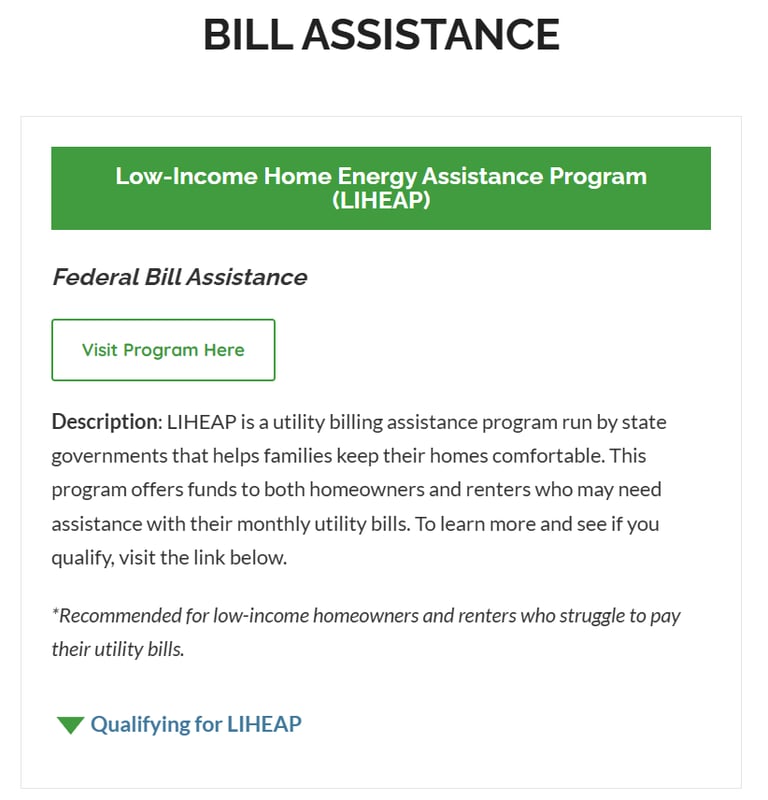
In order to construct this tool, I first reviewed and categorized the available energy resources. I grouped them by government level (federal, state, utility, and local/municipal) and then by category (bill assistance or energy efficiency).
After that, I needed to understand how a family would use this tool. It is overwhelming for people to have to answer many questions to see their eligibility. However, many of the energy resources were incredibly specific, such as experiencing certain medical emergencies or making home upgrades during a certain time period.
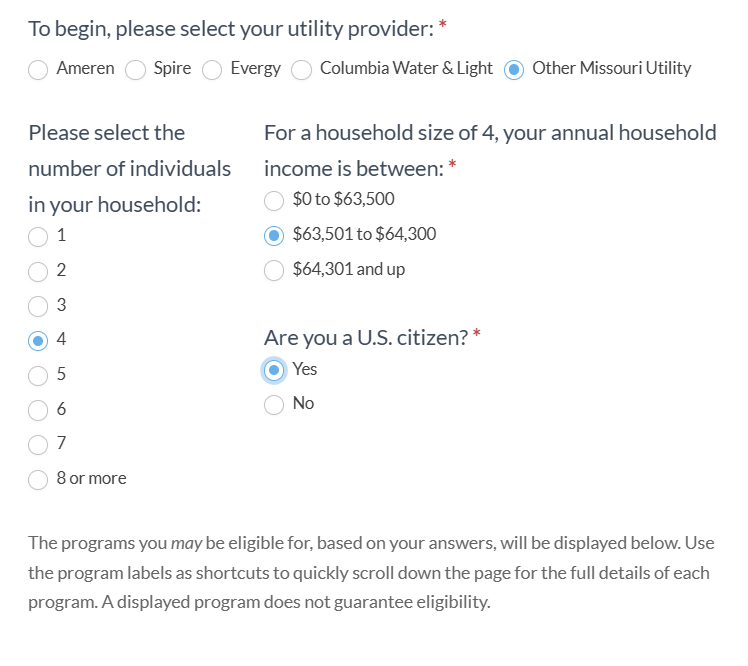
Since narrowing eligibility down to exact programs required far too many questions for residents, I reviewed eligibility requirements and found that most programs relied on three things:
Utility provider (to filter for utility-specific rebates that composed over ⅓ of offers)
Household income (primary eligibility determinant)
Family size (to determine whether a family was income-eligible)
I then created a mapping system to show which resources would appear using different responses.
A sample decision tree for a program would look like:
IF
Family_Size = 4
AND
Family_Income = $60,000
THEN
Show “Low-Income Home Energy Assistance Program”
Several adjustments were made for programs that relied on incomes within a certain percentage of the median state income. To fix this, I allowed people to choose common income brackets related to program eligibility.
For example, many programs required an income of 60% of the state's median income or less. That meant that people could select from an income range that was below this amount and income ranges above this amount, spanning about $20-40K in annual income.
This ensured that while residents may not meet every piece of eligibility criteria, they had a narrowed focus for which programs they should look into first.
Outcome/Impact:
This tool was released by Renew Missouri during the summer of 2023. It serves as a permanent resource for residents alongside their proprietary home upgrade financing system. The two software layers work together to help residents identify which energy upgrades they can make, how they can access utility government funding, and how to make appropriate payments once the upgrades have been made.